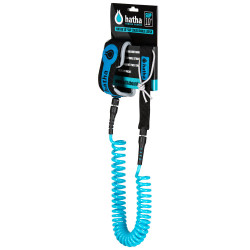
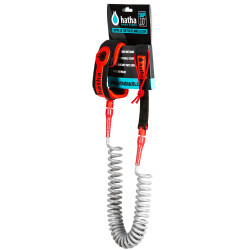
Board Leashes
Why wear a board leash? They are practical and could , in certain circumstances, save your life! Wind, tides or waves can quickly move your board away from you if you fall off, so using a leash that tethers your SUP, surfboard or bodyboard to you is a great way of keeping in touch with your board. When using a leash, one end of it attaches to a dedicated point on the board and the other typically wraps around your ankle or calf. If you were ever to fall into the water it's surprising how far away from the board you can actually fall, especially if there is a current or slight wind. Swimming after your board can be energy sapping especially in colder conditions. If you are always in touch with your board you can hold tight to it whilst you regain your composure or get your breath back and, should you find yourself way offshore in a rip tide for instance, sit tight with your board when waiting for rescue.
It's generally recommended that you use coiled leashes for flat water and race, this prevents snagging and drag. In surf conditions you should always wear a straight leash, this gives distance from you and the board, the last thing you want when being wiped out is a board landing on you!
Tips for getting the correct leash:-
- Length: As a general rule, you want to use a leash that is about one foot longer than your paddle board.
- Buy a board specific leash: If you have a surfboard at home, don’t simply take the leash off that and put it on your SUP. It’s likely not strong enough to handle the extra weight of a SUP. Always use a SUP Leash for a SUP board.
- Ankle or calf: Some leashes are designed to attach to your ankle, others to your calf. The decision is usually based on which is more comfortable for you, but some paddlers find that attaching the leash to the calf can help keep it from tangling in their feet if they move around a lot on the board.
- Right or left leg: Whatever you feel most comfortable with but it is generally recommended to attach the leash to your dominant leg.